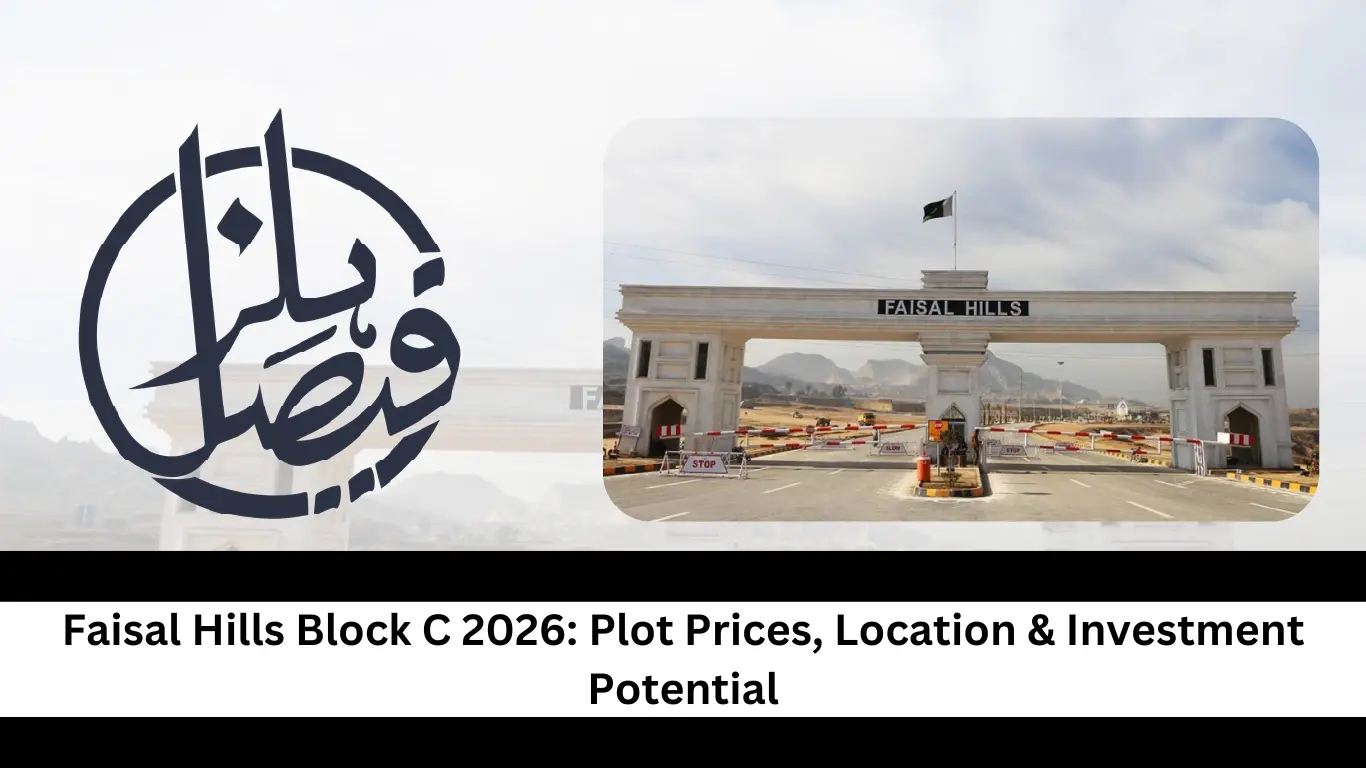
Faisal Hills Block C shows up in a lot of property searches, and there’s a reason for that. People aren’t just after a pin on a map here. They want to know where the block actually sits, what a plot is going for right now, how easy it is to reach, and whether putting money into it makes sense.
That investment question is the hard part. A good photo or a well-written listing can make almost any plot look like a great deal. What actually decides value is different stuff entirely. Location within the block matters. So does road access, development progress, plot category, and what’s around the property.
None of that shows up in a five-line ad.
So this guide goes through Block C the way it should be covered. Location, how to actually read the map, what prices look like right now, what to check before you buy anything, how it fits into the wider Faisal Hills master plan, payment options, and the verification steps most buyers skip without realizing it. By the end you should be able to ask better questions instead of just scrolling through listings.
Where Is Faisal Hills Block C?
Faisal Hills Block C is part of the larger Faisal Hills development in Taxila, one of the society’s more established residential sections. It ties into the main internal road network connecting it with the other blocks, and its access points link up with roads most people already associate with Faisal Hills.
Here’s why location matters more than it seems. Two plots can read exactly the same in a listing and still feel completely different once you’re actually standing there. One might be right off a main access road. Another could be tucked deeper inside with a longer approach. A pin on a map just shows you roughly where something is. It says nothing about what getting there involves, or how far that plot is from the nearest developed street.
If you’re weighing Faisal Hills Taxila as a whole, treat Block C as one option among several rather than the obvious pick. The full Faisal Hills location page breaks down how the different blocks connect to each other and the surrounding area, and it’s worth a look before you narrow things down to one specific block.
How to Read the Location Map
A map genuinely helps, but only once you know what you’re looking at. The Faisal Hills Block C map shows the internal layout, where it borders the neighboring blocks, and which roads run through or around it.
Reading it properly means asking a few specific things. Where does this particular plot sit relative to the main access road? Is it near a corner, on a wider street, or somewhere in the middle with narrower internal roads? These details affect both what it’s like to actually own the plot and how easy it’ll be to sell later.
One thing worth remembering: a map won’t tell you anything about possession status or how far construction has actually gotten on the ground. Two plots can look identical on paper and still be in totally different stages of development.
Before you finalize anything, match the dealer’s plot number against the current map and official documentation. A screenshot someone sent you last year may not reflect current information. Maps can also change as development moves forward.
Plot Prices in 2026
Price is usually the first thing buyers actually want to know, so let’s get into it, with the caveats that need to come along.
Plot prices in Block C vary by size, larger plots cost more, that part’s obvious. But size on its own doesn’t decide the final number. Location within the block matters more than most people expect. A plot on a wider road, or one that’s corner or park-facing, usually costs more than a similar-sized plot buried further inside.
Development status changes price too. A plot in a section where roads, utilities, and basic infrastructure are further along tends to sell at a premium over one in a less developed part of the block, even at the same size.
There’s also a gap between what a listing asks for and what a deal actually closes at. Sellers often price slightly above what they’re actually willing to accept, leaving room to negotiate. Treat the asking price as fixed and you’ll probably end up overpaying, especially if you’re comparing multiple listings without factoring this in.
Prices here shift with the market month to month, so any specific number quoted right now would be stale fast. The safer move is checking current listings directly and confirming pricing with someone reliable close to your actual buying date. The Faisal Hills plots 2026 page is a decent reference point for how pricing trends have moved across the project.
Faisal Hills Block C Plot for Sale: What Buyers Should Check
Not every listing that says “Faisal Hills Block C plot for sale” actually gives you enough to make a real decision. A legitimate one should include the exact plot number, size, street or road details, and roughly where it sits on the current map. It should also state the asking price and be upfront about development and possession status.
When a listing leaves these things out, that’s usually not an accident. If a seller can’t give you a specific plot number, or keeps dodging questions about documentation, take that as a signal rather than a minor detail.
What to Ask Before Booking a Plot
- What is the exact plot number?
- Can this be verified on the latest map?
- What is the current asking price, and is there room to negotiate?
- Are there any outstanding dues on the plot?
- What documentation proves ownership or allocation?
- Is the plot developed, or is possession still pending?
- Are there transfer fees or other charges beyond the sale price?
Asking these before you book takes maybe fifteen minutes. Skipping them can cost a lot more than fifteen minutes’ worth of trouble later.
Faisal Hills C Block Plot for Sale: How to Compare Listings
When you’ve got several Faisal Hills C Block plot for sale listings open side by side, the cheapest one isn’t automatically the smartest pick. Price by itself doesn’t tell you much.
A proper comparison looks at location, plot size, road width, position within the block, development status, what documentation is actually available, the asking price, and how easy the plot would be to resell down the line. Two plots can be the exact same size and still land at very different price points once all this gets factored in.
Usually the difference comes down to position, access, and what’s actually around the plot. A slightly smaller plot on a well-developed road with clean paperwork can beat out a bigger one sitting in an undeveloped pocket with messy documentation. Comparing listings the right way means looking past the headline number and figuring out what you’re actually getting for it.
Where Faisal Hills Block C Fits in the Faisal Hills Master Plan
Block C isn’t its own separate project. It’s one piece of the broader Faisal Hills master plan, connected to Block A, Block B, and Block D through the society’s main road network.
This bigger picture matters more for investors than it might seem. A block sitting closer to central access roads or planned commercial zones tends to pull more interest over time than one further away from the main circulation routes. Where Block C lands on that spectrum affects both livability now and resale value later.
That said, it’s worth being clear about what’s already there versus what’s still just planned. Roads, utilities, and infrastructure that are built and functioning today are a different category entirely from features that appear in master plan documents but haven’t actually broken ground. Treating planned amenities as a done deal can lead to disappointment, or worse, paying extra for potential that never shows up. The full Faisal Hills master plan page lays out the current development layout in more detail if you want to dig in.
Is Faisal Hills Block C a Good Investment in 2026?
There’s no one-size-fits-all answer to this, and honestly, anyone who tells you otherwise is probably trying to sell you something.
Location factor: How accessible a plot is within Block C directly affects demand. Plots near main roads and developed sections tend to pull more buyer interest than ones further inside.
Price entry: Whether current asking prices are reasonable comes down to how they stack up against similar plots in nearby blocks and elsewhere in Taxila. Worth doing that comparison before you commit to anything.
Development factor: Existing infrastructure builds confidence in a way that promises on paper just can’t match. A visibly developed section cuts down on uncertainty.
Resale factor: Plots with clean documentation, decent road access, and confirmed development status are usually easier to sell later than ones without.
End-user demand: If you’re planning to build and live there eventually, the location actually has to work for your daily life, not just look good on an investment spreadsheet.
Risk factor: Property values don’t climb in a straight line, and appreciation isn’t guaranteed. Market conditions, wider economic factors, and how the project itself is progressing all play a part.
Honestly, the investment case comes down to entry price, exact plot position, how far development has gotten, access, and how long you’re willing to hold onto it. The Faisal Hills investment 2026 page is worth reading alongside this section for more context on pricing trends and investment factors across the society.
Faisal Hills Installment Plan and Payment Options
Payment structure often decides whether a plot is even realistic for you, so it’s worth understanding before getting attached to a specific listing.
Faisal Hills generally offers installment options for people buying directly through the developer, usually built around a down payment followed by periodic installments over an agreed stretch of time. Resale deals work differently though, and typically mean negotiating terms directly with whoever currently owns the plot rather than following a set developer schedule.
Extra charges, transfer fees or development charges, can apply depending on the specific plot and how the deal is structured. These don’t always show up in the initial listing either.
Since payment terms shift, confirm the latest ones directly instead of going off older information. The Faisal Hills payment plan page has the current structure, and the Faisal Hills payment plan 2026 post breaks down whether the current terms are actually worth it.
Should You Buy Faisal Hills Block C for Living or Investment?
The right plot really depends on who’s buying and why.
For end users: Access, surrounding development, current road conditions, nearby facilities, expected construction timeline, and how far you’d be commuting daily, all of that outweighs pure price comparisons. A great deal on paper doesn’t mean much if your daily commute turns into a nightmare.
For investors: Entry price, how long you’d hold, current demand, resale liquidity, development progress, and broader market conditions matter more here. Whether the plot feels comfortable to you personally matters less than whether the numbers work out over time.
A plot that suits a patient long-term investor might not suit someone who wants to start building next year. Figuring out which category you actually fall into before you start looking saves a lot of going back and forth.
What to Verify Before Buying a Faisal Hills Block C Plot
This is the step that gets skipped more often than it should, usually because buyers get excited about a good listing and rush through everything.
- Confirm the exact plot number.
- Check it against the latest Faisal Hills Block C map.
- Match the plot size in the listing with official records.
- Verify ownership or allocation documents.
- Check transfer eligibility for that specific plot.
- Confirm there are no outstanding dues.
- Verify current development and possession status.
- Check the road and location in person, not just on a map.
- Compare the asking price against recent market rates for similar plots.
- Confirm all additional charges upfront.
- Use official documentation wherever it exists, rather than just taking a dealer’s word for it.
None of this takes very long, and all of it protects you. The Faisal Hills verification guide covers documentation checks in more depth if you want the full breakdown, and the Faisal Hills possession status 2026 page is useful for confirming where specific sections currently stand.
Common Mistakes Buyers Make in Faisal Hills Block C
A handful of patterns keep showing up among buyers who end up regretting a purchase.
Booking straight off a listing without confirming the exact plot number is one. Trusting an old map is another, especially when a dealer sends over a screenshot instead of current documentation. Comparing listings purely on asking price, without factoring in position or development status, trips people up too.
Ignoring development status altogether is a mistake, since it affects both livability and resale value directly. Paying before documents are actually verified leaves buyers in a rough spot if something turns out off. And assuming future development shown in planning documents is a sure thing, rather than confirmed and current, sets people up for disappointment.
Most of these come down to moving too fast. Slowing down even a day or two to actually check documentation and current status avoids most of it.
Is a Faisal Hills Block C Plot Right for You?
Consider it if:
- You’ve verified the plot documentation yourself.
- The exact location genuinely works for what you need.
- The asking price matches comparable market rates you’ve researched.
- You’re comfortable with the likely holding period.
- Current development and access match your actual requirements.
Reconsider if:
- The seller keeps avoiding or delaying documentation checks.
- The price seems unusually low with no clear reason why.
- The plot can’t be verified against the latest map.
- Development claims can’t be confirmed independently.
- You’re buying mainly because someone promised quick appreciation.
If most of your checklist lands on the first list, you’re in decent shape to move forward.
Final Thoughts on Faisal Hills Block C in 2026
Faisal Hills Block C offers a decent mix of location, connectivity, and pricing within the wider Taxila property market, but that doesn’t mean every plot in the block is equally good. Prices shift based on size, position, and development progress, and the investment case really comes down to factors specific to each plot rather than the block as a whole.
The exact plot matters a lot more than the block name attached to it. Two plots in the same block can be worlds apart in value depending on their road access, position, and how far development has actually reached around them.
Before you make a booking decision, verify the plot location, documentation, current price, development status, and payment terms. That groundwork takes a bit of time upfront, but it’s what actually protects the purchase. If you’d like help confirming specifics on a plot you’re considering, reach out through the Faisal Hills contact page.
FAQs
Q1: Where is Faisal Hills Block C located?
Ans: It’s part of the Faisal Hills development in Taxila, connected to the society’s main internal road network along with the other blocks in the project.
Q2: How can I check the Faisal Hills Block C map?
Ans: The current map shows the block’s internal layout, where it borders neighboring blocks, and the main access roads. Always make sure you’re looking at the latest version, and match it against whatever plot number a dealer gives you.
Q3: What are Faisal Hills Block C plot prices in 2026?
Ans: Prices move around based on plot size, exact location within the block, road width, plot position, and how far development has come along. Instead of relying on one quoted figure, check current listings and confirm pricing close to your actual buying date.
Q4: Can I find a Faisal Hills Block C plot for sale?
Ans: Yes, plots come up regularly through both developer channels and resale listings. A legitimate one should include the exact plot number, size, road details, current asking price, and development status.
Q5: Is Faisal Hills Block C good for investment?
Ans: It depends on entry price, exact plot position, how far development has gotten, access, and how long you plan to hold it. Not a guaranteed win, not a guaranteed loss either, it comes down to the specifics.
Q6: Does Faisal Hills have an installment or payment plan?
Ans: Developer-sold plots usually come with structured installment options, while resale plots involve separate terms negotiated directly with the seller. Always confirm current payment terms before committing to anything.